

Author: Sofía Fernández Cabrejas
What makes a film feminist? Is it enough for a film to be directed by a woman, or does feminist cinema have more to do with other elements related to how both the characters and the story are portrayed and built? This paper explores these questions through the feminist perspective developed by Laura Mulvey in Visual Pleasure and Narrative Cinema and her analysis of the patriarchal structures present in traditional cinematic language. After examining the different strategies and concepts commercial cinema uses, such as scopophilia, male gaze, and the objectification of the female body, this paper analyses two films directed by women: The Headless Woman (Lucrecia Martel, 2008) and Body (Małgorzata Szumowska, 2015). Neither of these films explicitly addresses feminist issues, yet both challenge the structures of representation used in traditional cinema through their treatment of female experiences, trauma, grief, and the body. By studying their visual and narrative strategies, this paper argues that a film can be considered feminist not only for its themes, but also for its resistance to the patriarchal gaze and for its creation of new possibilities for representing women as fully human subjects.
Patriarchal systems in cinematic representations
As an art student, I find myself wondering where the line is between an artistic creation made by a woman and a feminist piece of art. For me, both go inherently together, but it is true that, even if a piece is created by a woman, it may not be labelled as “feminist” by the critics. Taking cinema as an example, what exactly is a feminist film? Can a film directed by a woman not be considered feminist? Simply put, what elements are required for a film to be considered feminist?
Laura Mulvey’s paper, Visual Pleasure and Narrative Cinema (1975)[1], is one of the first works to analyse the structure of commercial classic cinema from a feminist perspective, highlighting the patriarchal system it perpetuates and how it benefits from pre-existing social and political structures. Mulvey uses psychoanalysis and the paradox of phallocentrism theory as tools to understand the symbolic order that surrounds us and within which the representation of the image of woman takes place. The paradox consists of the fact that all the symbolic system around the phallus needs the figure of the woman – as a subject lacking the phallus – in order to construct itself and giving it meaning. What does the patriarchal system want to see? Is it worthy enough to be re-presented? How can it be done? The paradox of phallocentrism is the central focus of Mulvey’s work, in which the image of the castrated woman is the one that brings meaning and order to the patriarchal world and its image[2]. This paradox lies in the fact that the role of the woman is to give and create the symbolic importance of the phallus and to raise her child in the patriarchal symbolic order. Her physical absence of the phallus and “her desire to make good the lack (of it)”[3] give it significance and symbolical presence, while personifying the castration threat that men are going to fear to the very end. Once these functions have been accomplished, her meaning in life is sidelined to a “memory of maternal plenitude and a memory of lack”[4]. She is no longer important in the symbolic world and no longer an active part of it. To recapitulate, women are important only in terms of their relationship with the male other, being the passive figure of “bearer of meaning, not maker of meaning”[5].
Of course, these ideas are part of psychoanalysis – a theory that modern psychology has surpassed long ago – and yet, they perfectly highlight the pillars of the representation system of the patriarchal culture and society, given that cinema works as a language in the service of the patriarchal order and codifies the erotic. Its formal concerns are, in reality, an exemplification of the obsessions of the society that produces this cinema; therefore, if you want to be represented, you must comply with its codes. But which are they?
Mulvey explains that there are two new languages of desire. The first one is scopophilia, which can be presented as pleasure from the act of looking (similar to voyeurism) and as pleasure from being looked at. The interesting thing about scopophilia is that it has to do with the idea of object. When you look at someone as something, you reduce them as objects, making it easier to treat them as a thing to be controlled or subjected. If you dehumanize something, it is easier to control it. Cinema uses this language all the time. It creates the feeling in the public of “not being there”, a feeling of distance, of separation from what is being shown on the screen, or as Mulvey calls it, “the illusion of voyeuristic separation”[6]. It allows the audience to look into a private world where they can project their repressed desire onto what is shown on the screen.
The second language of desire is the constitution of the ego through the process of identification. Cinema generates a “loss of ego while simultaneously reinforcing it”[7]. It works similarly to a child seeing themselves in a mirror; a body image is generated outside the body, and identification takes place. This is a crucial phenomenon because it creates the “I”, the persona, the subjective narrative in the film, allowing cinema to serve as a mirror of the human condition and human life. This recognition comes at the same time as a misrecognition of the self. A projection of the body outside the body is generated, which results in an ideal ego, an alienated object that turns into the ego ideal, which is going to generate the identification process for the next generations and so on. Altogether, the loss of the ego in the audience makes it possible to forget about the world that surrounds them and enter the new reality cinema is offering them. It is a flawless phenomenon in which all the pieces come together so that the public can fully immerse themselves in the cinema fantasy.
These two languages are the pleasure structures in commercial cinema, but “they are mechanisms not meaning. In themselves, they have no signification, they have to be attached to an idealisation”[8]. They help to create the concept of the world and the illusion of reality that cinema uses and represents, where libido and ego coexist as a substantial part of it. They are the rules of the game, but not the narration. Therefore, the next question is: where do women fit into the narrative structures?
Laura Mulvey talks about the “male gaze”. In this created world, the existing dynamic is based on the idea of the male as the active agent and the female as the passive one. Therefore, in the commercial cinema, the woman serves as the object where the male gaze projects its fantasies; that is, she serves a submissive position. Since her existence is tied to the idea of being displayed, to be looked at, she must have “to-be-looked-at-ness”[9], but only according to the erotic codes erected by the male gaze. If we take a close look at this constructed scheme, we will see, however, that the woman is indispensable to make all the pieces work, to keep the gears turning. In the same way as the absence of the phallus brings significance to the phallus itself, the woman signifies male desire and signifies the male character. Mulvey mentions in her article a great quote by Budd Boetticher: “What counts is what the heroine provokes, or rather what she represents. She is the one, or rather the love or fear she inspires in the hero, or else the concern he feels for her, who makes him act the way he does. In herself, the woman has not the slightest importance.”[10] She is a vital part of the scheme narration, but only because she is part of the male character-building process. She is what she provokes in him; her value is only possible if she can enter his space.
The woman displayed can be directed to two different targets. She can be an erotic object for the characters in her story reality, or for the spectator watching the film. Her existence is presented in a meta-cinematic way because she is often performing for the two male gazes directed at her simultaneously. This erotic contemplation usually freezes the narrative action and goes against the development of the plot, but because the storyline and the spectator align, coherence is maintained.
Men, on the other hand, control the narrative by being the active element of it. He is in control of the film's fantasy world, but most importantly, he is in control of the look of the spectator; he has all the power in the narrative, not only inside of it but also from an outside perspective. This is made possible by ensuring that the spectator identifies with the central figure, who is in a position of control. The spectator, therefore, is not looking at the sexualized woman but rather identifies himself with the male protagonist, who happens to be looking at the woman. In this way, the narrative remains intact, and the spectator’s gaze is controlled, further justifying the objectification of the woman and the brief interruption of the storyline. Hence, the male characters have all the elements an ideal ego must have – perfect, complete, superior – a 3D image, because the spectator is projecting himself in it, whereas women can only have characteristics related to the erotic object.
Getting back to the indispensability of the woman in a patriarchal system of representation, the woman also signifies a threat. She is missing the most important element of the system (the phallus), which implies that it is possible to be her, bodily speaking; it is possible to be transformed and have the phallus and all that it represents removed – the castration threat. It is a sign of menace to the masculine identity, and it provokes abjection, because, above all, do not be a woman. To take care of this menace, the male unconscious can approach two strategies. The first one is to worry about the re-enactment of this fear by investigating, demystifying, or punishing her, because she is guilty. She is perceived as a danger, as a guilty object, and the male can take control by punishing her or by saving her, turning her into the only possible functions women can have in the imaginary: spouse or mother. The other strategy is the substitution of her as a fetish object, so she is no longer a threat, only something worth looking at. If we think about it, the first approach has to do with voyeurism (the male character follows her, spies on her, to find out), mixed with sadism, which all relies on the idea of control, while the second one is about turning her into an object, a simple image. However, both oppose the idea of women playing an active role in the narrative and deny the concept that women are active participants in the conflict, pushing her outside the chain of events.
After discussing all these issues, one question remains: is it possible to make films outside these conventions? Mulvey states in the conclusion of her article that we must break down these codes of desire to create pleasure outside voyeuristic-scopophilic structures. This perception and reproduction of pleasure reinforce the patriarchal roles and, therefore, the cultural image of women. It is not enough to try to make space in this narrative structure for other types of desires and characters that are not dominated by the male gaze. We must destroy pleasure as the traditional narrative cinema understands it, break down the codes of patriarchy, and use an alternative, experimental, and feminist cinema. We must free the look of the camera and the audience – the material existence of the recording process and the reading of the images, that is, the ones who create the reality of the film – so that they do not depend on the male gaze or the male hero. The destruction of pleasure can be a radical weapon that can challenge the assumptions of the mainstream film. A cinema outside capitalism and patriarchy can highlight and react against these, and by disrupting this way of perceiving pleasure, we can break the comfort of traditional narrative and force the audience to confront it.
Laura Mulvey’s article (1975) is one of the first film studies conducted from a gender perspective and is cited on numerous occasions in feminist approaches to cinema, but we need more contemporary studies to help us identify recurring misogynistic patterns so that we can raise awareness and try to find a solution. Jennifer O’Meara’s article (2016)[11] talks about this negligence in film studies and discusses a social phenomenon that occurred some years ago and became viral: The Bechdel Test (Alison Bechdel, 1985). This is a formula created by Alison Bechdel, a comic artist, employed to “address a perceived silencing of women in cinema”[12]. Its invention is very far away from film studies, not trying to be a serious formula to apply in gender analysis. To pass the test, the film must have “at least two women, who have at least one conversation, and about something other than a man or men”.[13] Therefore, this test analyses the use of speech and the verbal and vocal expressions of women in cinema, that is, the voice of women in films. However, as we can see, the test is very simple and superficial, and it does not delve into the real space women's voices have in cinema. According to O’Meara, this non-official test began to be a rating system in Swedish cinemas in 2013, which was followed by the 2014 hashtag #AskHerMore and the desire to change the way the media talked about women in the cinema field. The virality of The Bechdel Test is, for me, symptomatic of the need for official and established academic research around the voice of women in this representation system.
O’Meara’s article acknowledges how “women in film are frequently attributed unreliable speech, punished for talking, or silenced altogether”, but highlights a very important aspect that most gender analysis studies miss, including The Bechdel Test. It is not enough for a film to have one line of dialogue to avoid being labelled as “non-passing of the test”. To make an accurate study of the verbal expression of women, it must also consider the complexities of their speech, that is, how do they elaborate and express it? When, where, and why? Are their words acknowledged by other characters? Male characters? Are they also acknowledged outside the film by the public, transforming them into memorable lines? And exactly how O’Meara points out, in this matter, there are other issues to consider if we want to make a committed analysis, like what kind of characters are silenced by the speech and power cinema dynamics, based on age, skin colour, or nationalities outside Anglophone countries.
What is a feminist film?
But enough with the theoretical frameworks! What film can be considered feminist? Let’s see some specific examples!
The Headless Woman (2008) is a film directed by the Argentine Lucrecia Martel, co-produced by Argentina, France, Italy, and Spain, and nominated for the Palme d'Or at the 2008 Cannes Film Festival. This film follows the story of Vero, a middle-aged, wealthy-class Argentine woman who, while driving along at the canal, accidentally runs over an animal, killing it at the moment. This simple premise becomes complicated as we, the audience, aren’t actually sure whether she hit an animal, as Vero claims at the beginning, or a child who was playing by the canal, as the film suggests. What makes the film interesting and exciting is the distortion of reality Martel creates. Our perception of it is completely limited, and we are incapable of relying on our senses to try to seek the truth. The screen clearly shows us Vero's first reaction: in shock and crying, she needs to stop the car and breathe. We can almost see her thought process as she tries to understand what just happened. She slowly puts her sunglasses on, like a mask to hide her emotions or as an object that brings her comfort, a false sense of protection, and starts the car again to drive away. Some minutes later, she pulls over again and gets out of the frame, but from our perspective as the audience, it looks like she is throwing up on the side of the road as the rain starts to pour. This cinematic sequence introduces us to the film’s central theme and the source of the conflict, especially since it opens with a scene of children playing by the canal. What did Vero run over?
At first glance, the film does not present a feminist issue. It is not about politics or marginalized women, or direct feminist issues such as abortion, the workplace, or sexual violence – the typical ones represented in films because, sadly, they are the typical ones women face in their lives. So, why do I mention this film? The answer is that I find several feminist elements in the way the story is presented in this film.
First of all, the story is about her. The main character is Vero, a woman who suffers a traumatic experience, one that has to do with luck (or the fact that she wasn’t paying attention to the road) and not with her female condition. The event she experiences is something that could have happened to anyone, women or men. Secondly, her body is not portrayed as an erotic object, and the visual narrative language of cinema (the camera, its point of view, and the framing choices) is done without fragmenting her body or positioning it as something to look at. On top of that, all these elements create a beautiful language for Vero. The absence of words and the lack of perception of the rest of the environment make it obvious that the language of trauma is silence. But a silence that signifies pain, loss of identity, grief; in short, a silence full of meaning.
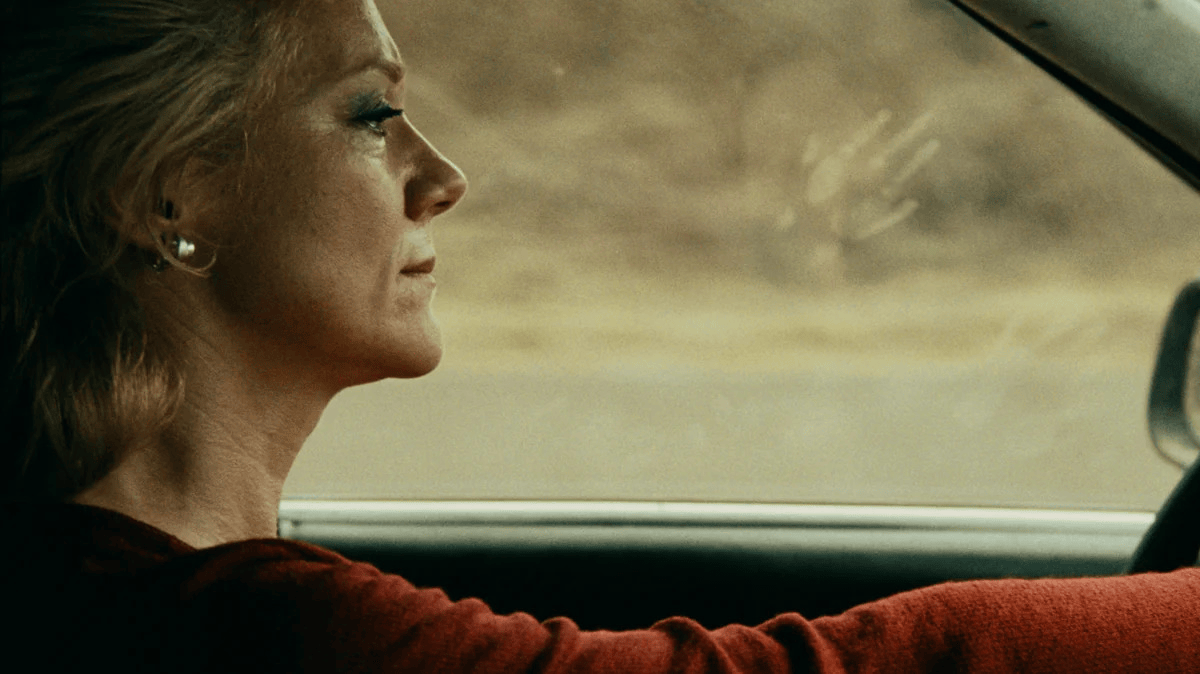
These choices clearly challenge the patriarchal erotic codes of traditional cinema that Mulvey had so accurately described in her article. The main character is a woman, and she is the active agent of the plot and the one who initiates the chain of events. The nature of the story is deeply human, instead of “female”, because for me, what the patriarchal order does is systematically dismiss women’s issues (whatever they may be) as “female stuff”, often treating them as less serious and depriving them of the connotation of human problems. The masculine is seen as universal, and here we see how the main conflict faced by a middle-aged woman is elevated to that category. In addition, she is not relegated to a secondary character, and her value in the story is not related to a man. She doesn’t signify the male character by inspiring in him something (like love or fearlessness), which would make her important for the plot, because she is the plot; the story is about her. There is no need for anyone else, especially a male character, to make this story appealing.
As I mentioned before, her visual image also falls outside the commercial system. She is not just a body seducing a man and/or the audience, but rather a complete character with a complex arc. The framing of her body is very well done: Martel uses close-up shots that focus only on her face and doesn’t allow us to see the rest of the world – the rest of the characters, the rest of the spaces, the actions behind the main plot. In The Headless Woman, we follow the trauma, the consequences, and the way to overcome them of a woman, and we are not allowed to see anything else. Her face and her body are the reflection of this trauma, and it works as the visual language of it. There is an absence of sexualisation, an absence of the erotic element, an absence of the fragmentation of the body to be looked at, for performing to the other. There is no fetishism in the gaze; we only look at her to see her and her conflict. This element is key to the story because we, as the public, are the only ones who look at her, and in a context in which no one truly stops to see her, to look at her in the eyes and realize she needs help, this gaze turns into support: we are supporting her through her journey. The look here is not a sexual fact, but rather it turns into an accompaniment, an acknowledgment of the pain, and a way to make the trauma palpable and make the silence speak. There is no idealisation of Vero, which allows her to free herself and to let her organically face the traumatic experience. These changes related to the representation of the body have so much importance because they mean that she is not presented as a (sexual) object; therefore, there is no patriarchal control over her body, and, the most important aspect for me, she is not dehumanized. When you read about traditional cinematic representation, the approaches you usually see completely dehumanized women (like the scopophilia and the control-and-sadistic approaches). She becomes either a sexualized but inanimate object, or a being with negative connotations who is unworthy of being treated with dignity as a person. If we liberate the characters from these categories, they grow into people with complete arcs, complex conflicts, and stories worth telling.
As for the film's structure, Martel’s use of the camera transmits the character’s mental dissociation from the real world. Vero’s world is blown up by this event, and since that moment, her life turns into disconnected moments, foreign and alienated. Since the traumatic experience, she is incapable of recognising her own life, and she becomes this lost being, silenced and going through life on autopilot. All the film has an element of discomfort because it is scary not to understand your life, not to understand where you are or what context is in the environment you are in. Her dissociation also affects the people around her as her pause in the routine changes the dynamics: the role she used to play as a housewife (with enough money to avoid manual chores and enjoy her free time with her friends) comes to an end when the trauma forces her to stop. The reaction of the people around her, that suddenly notice her due to her disconnection, makes us think that she used to navigate her life on a superficial level and that her lifestyle did not require her to reflect upon herself. The change of dynamics comes from the fact that the people around her must start to take care of her. For example, her husband realizes that something is wrong and starts to ask questions, to try to make her feel better and to find a solution to her pain – that is: to take the role of caregiver. The crash at the canal shakes her from top to bottom, and it feels like part of her silence also comes from the realisation of all the pre-settle social elements that used to imprison her in a jail with golden bars. The Headless Woman is the perfect example of blowing things up to make them visible.
Another important aspect of the film is, in fact, the men. It may seem that there is no castration anxiety in the film, as Mulvey describes, because there are no men present. However, this is not entirely true. There are men in the film, but they compose the environment that surrounds her and, therefore, the element that observes her closely. For me, it feels like it opens a conversation rather than acting as a pre-established dynamic. The men are the infrastructure of this upper-class, because they are the ones who have the right contacts to hide the accident. It raises, from my point of view, an interesting question: how do men engage in practices of care? The men around Vero try to deny the crash, to convince her that nothing happened, and to distance her from the trauma and the responsibility. They exercise their care by removing her from a position of power and relieving her mental burden, taking charge of the situation and not allowing her (or not wanting her) to think much about the incident or what that means to herself – is she now a murderer? Does the mother of the child know? What is the meaning of life to her now? etc. The film makes the audience wonder whether this is the right approach to take when someone is in pain. In any case, Vero has the final say because she must choose which path to follow and which version to believe. It is up to her to try to accept the trauma by denying it and accepting the help of the men, or going through it, but alone. Feminism permeates the film because, firstly, the story specifically follows her and talks about her pain outside the traditional cinema scheme and archetypes (without objectifying the body or dehumanizing her), making the narration itself an example of the female gaze; and secondly, it brings up conversations around the female role and the figure of the caregiver. Even though there is no direct address to political feminism, feminist ideas make possible the narration of this film.
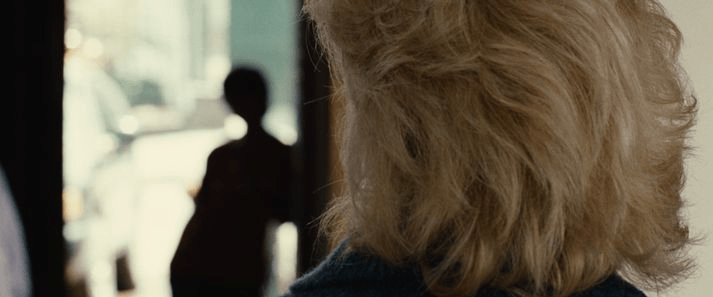
Let’s look at another specific example. Body (2015), or in the original Polish title, Ciało, is a film directed by Małgorzata Szumowska and awarded for Best Director at the 65th Berlin International Film Festival. This film begins with a nod to an element of magical realism, with the investigation of a man who hanged himself, and then, as one of the protagonists explores the scenario, the man stands up and walks away. This is, in my opinion, a visual metaphor of death and grief, as well as an introduction to the supernatural elements that we will find in the film. The story is about a father and a daughter fighting and struggling to overcome the death of their spouse and mother. The film shows us different ways the pain takes over someone's life: in the case of Janusz, the father, alcoholism and throwing himself into his work are his strategies to escape his grief, while for Olga, anorexia and controlling food are her ways of coping with the pain. With the help of Anna, the third main character, the film opens a conversation about death, lost loved ones, and the supernatural. Maja Ostaszewska plays a therapist specializing in eating disorders who is also a medium capable of communicating with ghosts. As she treats Olga, she tells her and her father that Helena, the deceased mother, is trying to contact them. The film revolves around how each of them copes with loss and how they can find themselves again.
Body, as the title suggests, talks about bodies. It is undeniable that the theme of eating disorders is linked to the social pressure and expectations bodies have, and systematically, these anxieties weigh particularly heavily on women. To belong to the patriarchal order, the woman’s body must be sensual, sexual, erotic, must be a performative object, and must always be perfect, not ugly, not old, not for any gaze other than the male one. It must be perfect because it is not human, but female. Of course, eating disorders are not just part of the female experience: men also suffer from them, despite the judgments and stereotypes that seem to dismiss these experiences when it is their case; but their relationship with the body also has a lot to do with the patriarchal order. Men’s rejection of the feminine is so brutal that they must always be strong, masculine, the active sexual agent. In doing so, a portrait of a “perfect image” is also created—one that is ultimately impossible for them to live up to. It is undeniable that this topic is inherently related to the patriarchy and its sexist stereotypes, and women are the most affected by it because, worse than looking female is being female. Women will always face a kind of pressure related, on one hand, to the control and punishment of their bodies, and, on the other, to the expectation of being the “perfect woman” – whatever that may mean – because otherwise, the social rejection from the patriarchal order will be brutal.
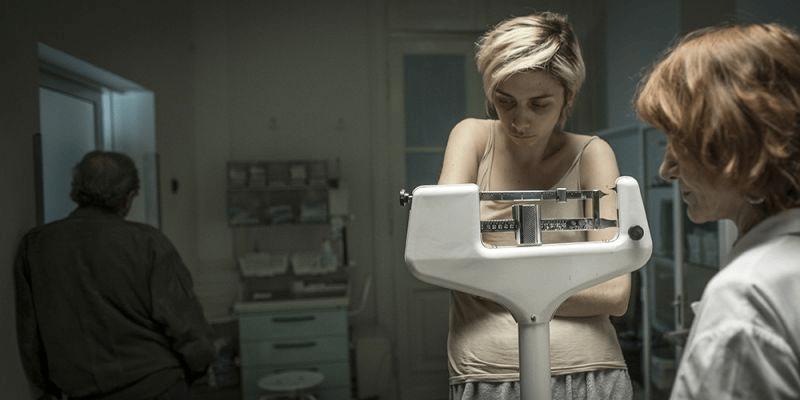
The premise of discussing anorexia, therefore, is closely tied to a gender perspective, but even more so if we take a look at how these bodies are portrayed in the film. Olga’s body is shown without idealizing it. It is a female's sick body, weak, with no place for it within the male gaze unless it is romanticized or sexualized. However, Małgorzata Szumowska approaches it from a very thoughtful perspective: Olga’s body and those of the other members of the therapy group are depicted without fear, showing the sickness and the difficulties that type of disorder has, but also showing the pain behind it. In the group therapy, we can see a little bit how these girls go through different traumas that have led them to develop anorexia or eating disorders as a coping mechanism. Szumowska presents these bodies without idealization, without any expectation, and without turning them into dehumanized fetish objects. She approaches them carefully and puts them in the big screen just as they need it: without any pressure, sexualisation or punishment.
The careful and good direction of the film is reflected in the narrative decisions it has. Szumowska treats the difficult topic of anorexia with respect and intelligence by not making it the central focus of the film but rather presenting it as a consequence of the film’s true focus: mourning. There isn’t any eroticism because the movie is not about anorexia, but a broader and more complex topic, such as the loss of a loved one. The film shows us the complexity of grief, and through Olga’s character, how the body can be the result of pain. The interesting part is that there are three different bodies in the film with the three main characters (Olga, Janusz, and Anna), and each of them is facing a mourning process with different consequences. Janusz is a father with the impossibility of having a truthful relationship with her daughter, without a wife by his side to help him raise her and face the problems she may endure in her life, such as anorexia. The guilt and the pain are transformed in his case into an addiction to alcohol, to try to forget as well as to cope with his life. The narrative decision was to put this character as a public prosecutor, which makes a lot of sense and helps to create his personality. Janusz frequently encounters gruesome crime scenes, such as murders, suicides, homicides… which makes him view death from a rational, cold, and detached perspective. The death of his wife shook him because it was a close death, an emotional one, and he had no idea how to deal with it. In order to approach it from a rational perspective, he must get detached from it, using alcohol as a tool, and for him, it makes no sense any other way to see death. That is why Anna, the medium, is an outrageous way out of the pain, because for him it is impossible to talk to the dead ones. Anna herself also went through grief with the loss of her baby, and she tells in the film how she was completely broken until she was able to see his spirit, in the crib right next to his bed. Her connection to the supernatural helped her to heal. These three characters are the tools Szumowska uses to show us how the body is a symbolic space of pain. The body here is a scenario where the loss is represented, a place where consequences and social pressure become physical. Body is a film about three examples of the corporality of pain.
I think an interesting aspect of the film is the contrast between male and female positions regarding the loss. Although this is not the film’s central theme, Janusz’s character serves as a counterpoint to the other female characters. The rationalist male world declines the emotional and spiritual level, spaces associated with the female thought of the years. The gender roles are, in fact, present in this film, and, for me, there is some kind of criticism in making them present. How is a man going to approach an emotional trauma? How is he going to interact with his reality? How is a woman, however, going to do this? What are the differences between how they are taken care of? How do they take care of others? The common element the characters have is that none of them has gotten over their trauma, over their loss. Even Anna, the therapist, is trapped in this supernatural dimension just to not forget his son, even if that means being stuck in the past. It is only at the end of the film that there is a kind of connection between Olga and Janusz, a sign that they can save their relationship, that is, a sign that they can save each other. Thanks to the comedy, they are able to laugh at the situation and forget for a moment about the pain by acknowledging the absurdity of the situation. Szumowska offers us a story that teaches us to use laughter to take the drama out of death without diminishing its importance, and comedy to reconnect with our loved ones when we need them most.
Conclusion
To conclude, why have I chosen these two films? I believe both The Headless Woman (Lucrecia Martel, 2008) and Body (Małgorzata Szumowska, 2015) are two films that, at first glance, do not seem feminist. The topics are not the typical ones we have seen before labelled as such, and yet, to me, they are both inherently feminist films. Just as I analysed in this article, the creation process and the perspectives from which they have been written are completely outside the structures of traditional commercial cinema and could not exist without the changes feminism did. For example, they both contribute to the destruction of the male gaze by a new approach to the body: a middle-aged protagonist already challenges all the misogynistic visual representations of a female body, because it shows that it is not only young or sexualized bodies that deserve to be represented. Martel’s use of the camera, which only follows Vero, focuses all the attention on her and gives her a significance that would not be possible in a patriarchal system. The female character of The Headless Woman is not a sexualised body, nor a one-dimensional character with negative connotations (manipulation, evil, twisted, femme fatale) that must be punished. Her body is only relevant to the story as the physical representation of her trauma, and its use inside the story is justified and logical. In Body, the misogynistic rules that traditional cinema has are also tested. There is no fear to show a sick body, one that is far from perfect and is not sexualised. Neither of the two films needs to objectify the body as a symbol of male leisure, to show it as a performative element, fragmented and erotized. I place a strong emphasis on this point because I truly believe that the female body and physicality are the main elements of the patriarchal order’s system of representation. The paradox of castration and all the psychoanalytic consequences Mulvey explained are based on the material difference between the male and female body, and lots of genre archetypes are supported with visual codes. Furthermore, their narrative structures differ significantly from the male gaze, too. The stories themselves are outside it and impossible to imagine in a traditional cinema context. The films’ production – including their writing, filming, and direction – has characteristics that would not have been possible without feminism. For me, it is very obvious that the directors are women because the female gaze is very much present in the storylines. The films tackle the themes – the trauma of the accident and the trauma of grief – with complete commitment and seriousness, giving them the importance they deserve. Both conflicts are not about love, or related to a male character, or even about a very stereotypical female matter; both are actual traumas that happened in their lives, violent, strong, and very much present in their realities and in their families’ lives. There is no idealisation, neither of the female characters nor of the main event that takes place in the story, and the internal conflicts take on the importance and value necessary to approach them. Consequently, I would not recommend these films as feminist, but we should be aware of the elements that allow them to escape the male gaze and patriarchal intervention in their creation, because those are indeed possible thanks to a feminist perspective and feminist creation. Maybe these films do not tell an inherent feminist story, but their existence is very much feminist.
I think it is worth considering, as a final thought, how these films interact with the public. In traditional cinema, the audience’s gaze is crucial because it also participates in the patriarchal order by demanding certain types of representation and validating and justifying them within the plot, even when they obstruct the organic action of the plot. But who is the audience for these films? While reading Visual Pleasure and Narrative Cinema, I couldn’t help but wonder what happened to the audience who weren’t interested in that type of representation. What happened with the female public? I know that we all participate, even when we do not want to, in the patriarchal order and in the visual system they set up (women also want to see stories about love, the male hero… I am not denying that), but it is logical to think that maybe the identification process the male audience goes through is not as strong among the female audience. I believe these films illustrate this point: as a female spectator, these films connected with me more than others from the traditional order, because I could identify with the main characters and the female ones significantly more. By placing the conflicts in a much more universal level (there are not “female matters”; they are about death, trauma, and identity) and outside the visual genre stereotypes, they are closer to my personal conflicts. I do not face only “female problems” in my everyday life, but human ones, and these films are just that: human.
[1] Mulvey, Laura: Visual Pleasure and Narrative Cinema. Screen 16 (1975) no. 3. pp. 6–18.
[2] ibid.
[3] ibid. p. 6.
[4] ibid. pp. 6–7.
[5] ibid, p. 7.
[6] ibid. p. 9.
[7] ibid. p. 10.
[8] ibid. p. 9.
[9] ibid. p. 10.
[10] Budd Boetticher in Mulvey, Laura: Visual Pleasure and Narrative Cinema, p. 12.
[11] O’Meara, J.: What “The Bechdel Test” doesn’t tell us: examining women’s verbal and vocal (dis)empowerment in cinema. Feminist Media Studies 16 (2016) pp. 1120–1123.
[12] ibid.
[13] ibid.